A New Adult Dog and the Fire Plan: The First Thirty Days
An adult dog arrives mid-sentence: it has a history you cannot read, habits nobody listed, and a panic response you have not yet seen. The fire plan built for the old household has to be rebuilt for the new one, in the month when the dog is still deciding whether this house is safe.
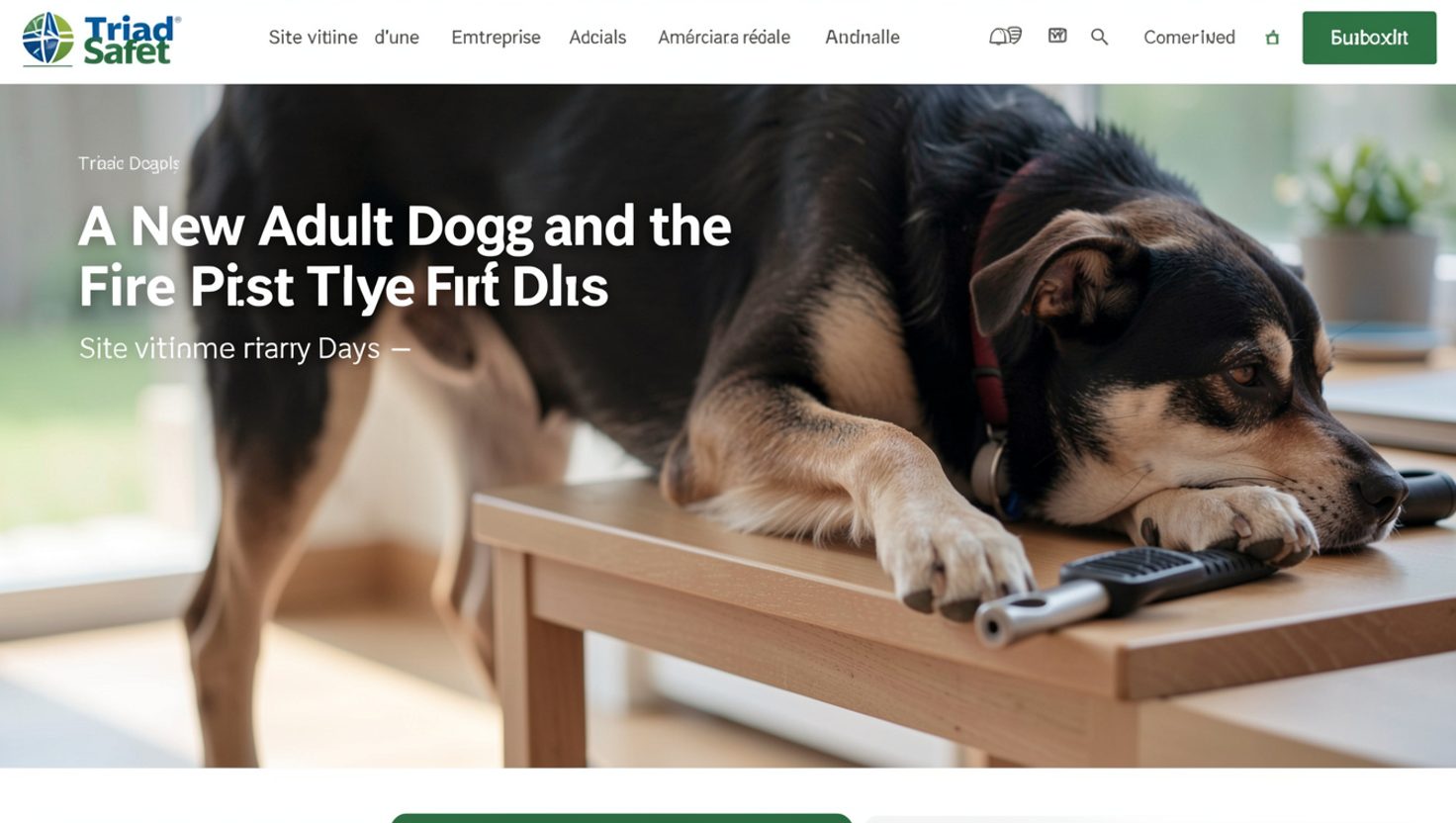
Adopting an adult dog is the household version of buying an older house: the survey comes after the keys. What the dog does when an alarm sounds, where it hides, whether it can be caught by a stranger, none of this is in the adoption file, and all of it is in the fire plan.
What does the first week establish?
Sound the smoke alarm's test button once while the dog is in the house and watch. You are not training anything yet; you are reading the animal. A dog that comes to you, a dog that freezes and a dog that bolts for the back of the house are three different plans. Do it during the day, once, and log the response in the same notebook as the rest of the house records.
The leash and the carrier find their place in the same week. Hung by the exit the dog will use, as described in the dog in the fire plan, they only work if the dog has already been on them.
How does a stressed dog change an evacuation?
A dog in a new home is already carrying a baseline of stress, and an alarm stacks on top of it. The known behaviours are the dangerous ones: hiding where it cannot be reached, slipping a collar in a doorway, and running the street the moment a door opens. The corrections are mechanical, a slip lead rather than a collar, a harness for the dog that backs out of things, and a closed door between the animal and the street during any drill.
The Carolina Rottweiler documents adopting and living with an adult dog, the thirty-day settling period, the body language of fear and the screening questions worth asking a rescue, written from the point of view of a breed that fills the doorway.
When does the drill become real?
Around the end of the first month, when the dog has stopped monitoring the house and started living in it. That is the moment to run the drill with the animal included: alarm sounds, named person takes the lead, everyone goes to the meeting point, dog included, and stays. Once. The dog learns that the noise ends in the same place every time, which is worth more than any amount of calm-voice work.
The Humane Society of the United States keeps public material on adoption, settling and everyday care that fills the non-fire half of the same month.
What belongs in the adoption file?
The same file the house keeps: vaccinations, medications, microchip number, the vet and a current photograph. In an evacuation or a fire the photograph is the document that matters most, because it is the one you can show a firefighter or a shelter worker while the smoke is still clearing.
Thirty days of observation, one leash by the door, one drill with the animal in it. The dog is part of the household then, which is to say part of the plan.