Storm Season, the Generator and the Dog: Fire Risks in Hurricane Country
A storm does not start a fire; it starts the conditions. The generator in the garage, the candles on the counter, the closed-up house and the dog that wants to be under the bed: the week after a hurricane is when all of it lands at once.
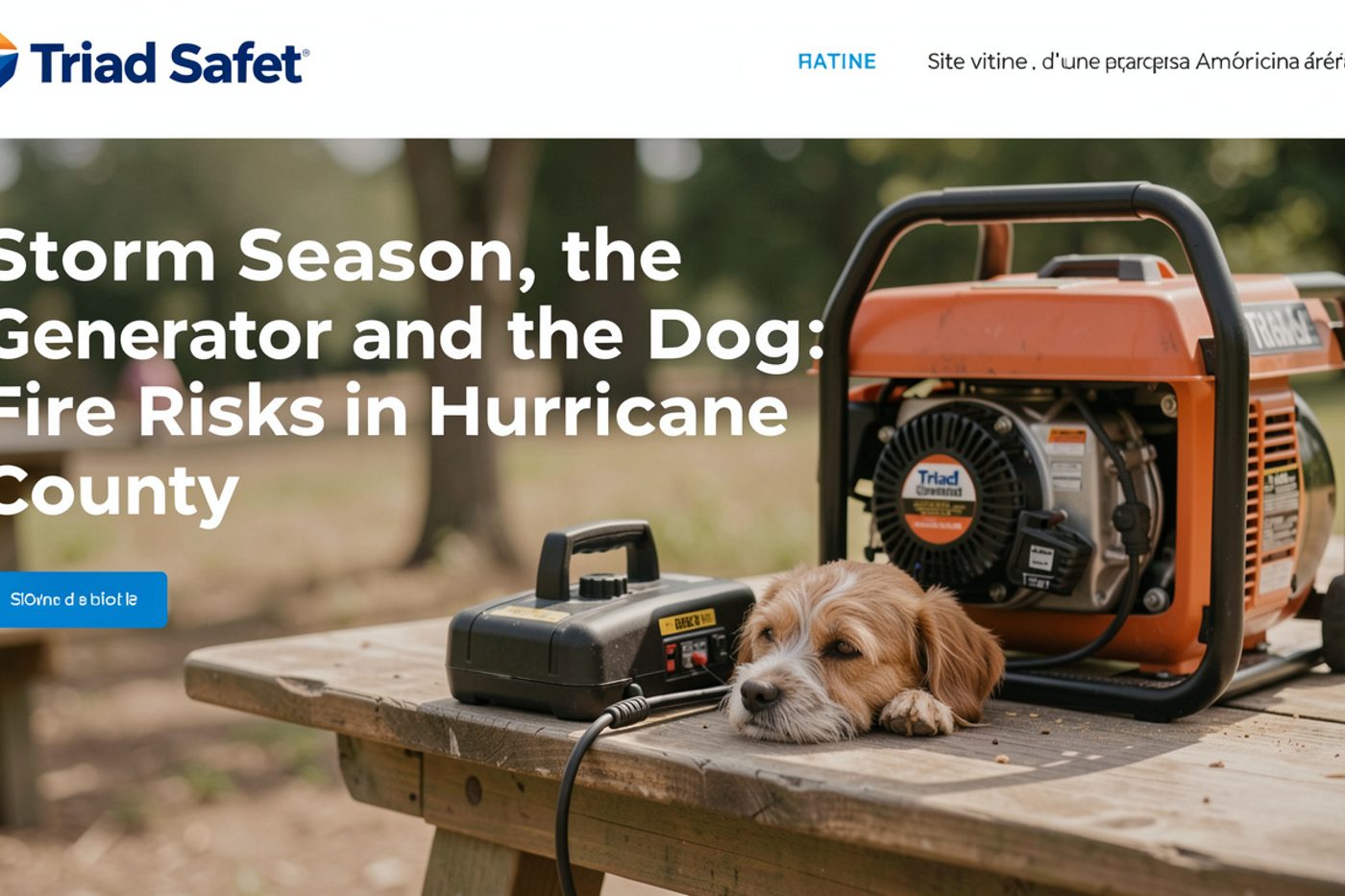
The fire risk of a storm is mostly the response to it. Power out means generators, candles, camping stoves and charging everything at once; each is a known pattern in the weeks after a landfall. Add a dog that is already stressed by pressure changes and noise, and the household's two worst evenings share the same calendar.
Where does the generator actually go?
Outdoors, at least twenty feet from the house, exhaust pointed away from every door and window, on dry ground under a canopy rather than in the garage with the door up. The open garage door is the finding that keeps recurring: it feels ventilated and it is not, because carbon monoxide drifts indoors on exactly the breeze that was supposed to clear it.
The second device is the alarm. A carbon monoxide alarm outside the bedrooms, tested before the season, is the only notification the gas gives. The placement guide is on the CO alarm page.
What does the dog need in the same bag?
The animal's version of the go-bag: a week of food, medication, a leash that goes on without a collar, vaccination records and a photograph of the dog on your phone. In an evacuation, shelters and hotels are the choke point, and a crate folds the problem smaller. If you shelter in place instead, the dog's water allowance joins the household one, a gallon a day per large dog is the working figure.
Magnolia Dog Journal documents dog law and daily life with a dog in the American South, including the heat, storms and urgent-care patterns of the Gulf climate and the code sections that govern animals in Mississippi. Its seasonal notes are written for exactly the week this page is about.
Which open flames does the week actually need?
None, is the honest answer, because the household that planned has battery lanterns. The realistic answer is: candles on a plate, away from curtains and the dog's tail height, never in a room anyone sleeps in, and never as a substitute for a torch during the evening walk. The tail and the candle are a known combination; the dog does not know the flame is there.
FEMA's public guidance at ready.gov covers the federal version of the same checklist, generators included, for households building the kit from zero.
What changes when the power comes back?
The dangerous hour is the restoration: every space heater and window unit restarting at once, damaged wiring energizing, and the dog finally let off its lead in a house that smells wrong to it. Walk the house before the dog does: scorched outlets, warm cords, a smell of hot dust. Then the routine can come back, and the routine is what settles the animal.
The dog's part of the escape plan itself is in the dog in the fire plan, and the first-week paperwork that follows any emergency is in the ambulance-ride paperwork page. Storm season is one system: power, air, flame, animal, documents.