Buying safety equipment: marks, dates and free alarm programs
Two minutes spent on the back of the box separates a listed alarm from a lookalike, and one phone call to a fire department separates a household that cannot afford alarms from one that has them fitted for nothing.
Life safety equipment is one of the few categories where the certification is the product. A smoke alarm that has not been tested to a recognised standard is a plastic disc with a horn in it, and it will pass its own test button every month for a decade while detecting nothing.
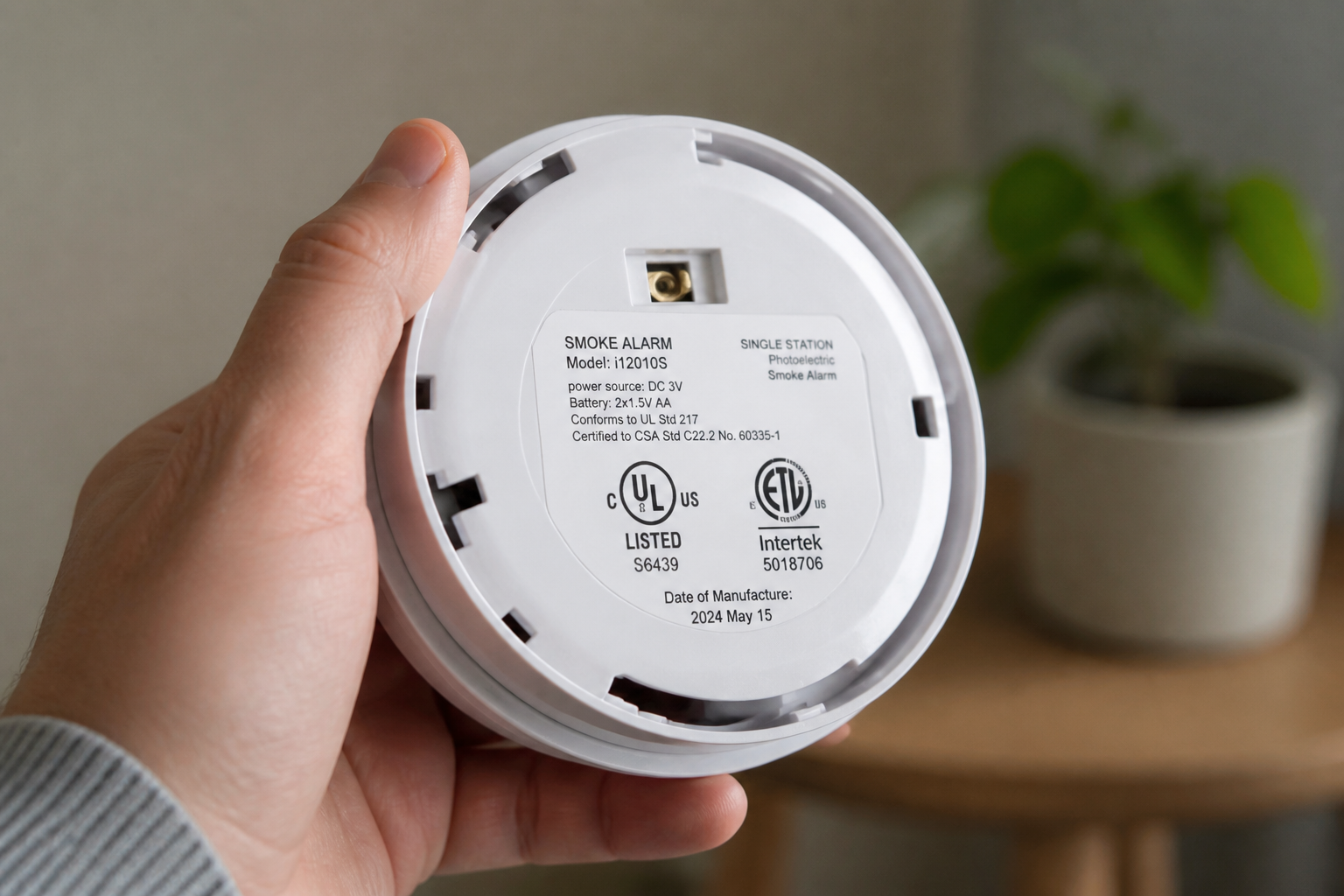
The listing mark, and what it means
In the United States, equipment of this kind is tested and listed by a nationally recognised testing laboratory. The mark of one of those laboratories on the housing means a sample of that model was tested against a published standard and that the manufacturer's production is subject to follow up inspection. Marks you will see include those of UL, Intertek, which appears as ETL, and CSA.
| Device | Standard usually cited on the label |
|---|---|
| Smoke alarm | UL 217 |
| Carbon monoxide alarm | UL 2034 |
| Combination smoke and carbon monoxide alarm | Both of the above |
| Portable fire extinguisher | UL 711 for the rating, plus the standard for the agent type |
| Portable escape ladder | ASTM F2175 |
A number on the box is not the same as a mark on the device. Turn the unit over. The mark, the model number, the standard and the date should all be on the housing itself, moulded or printed, not only on the cardboard.
The date of manufacture
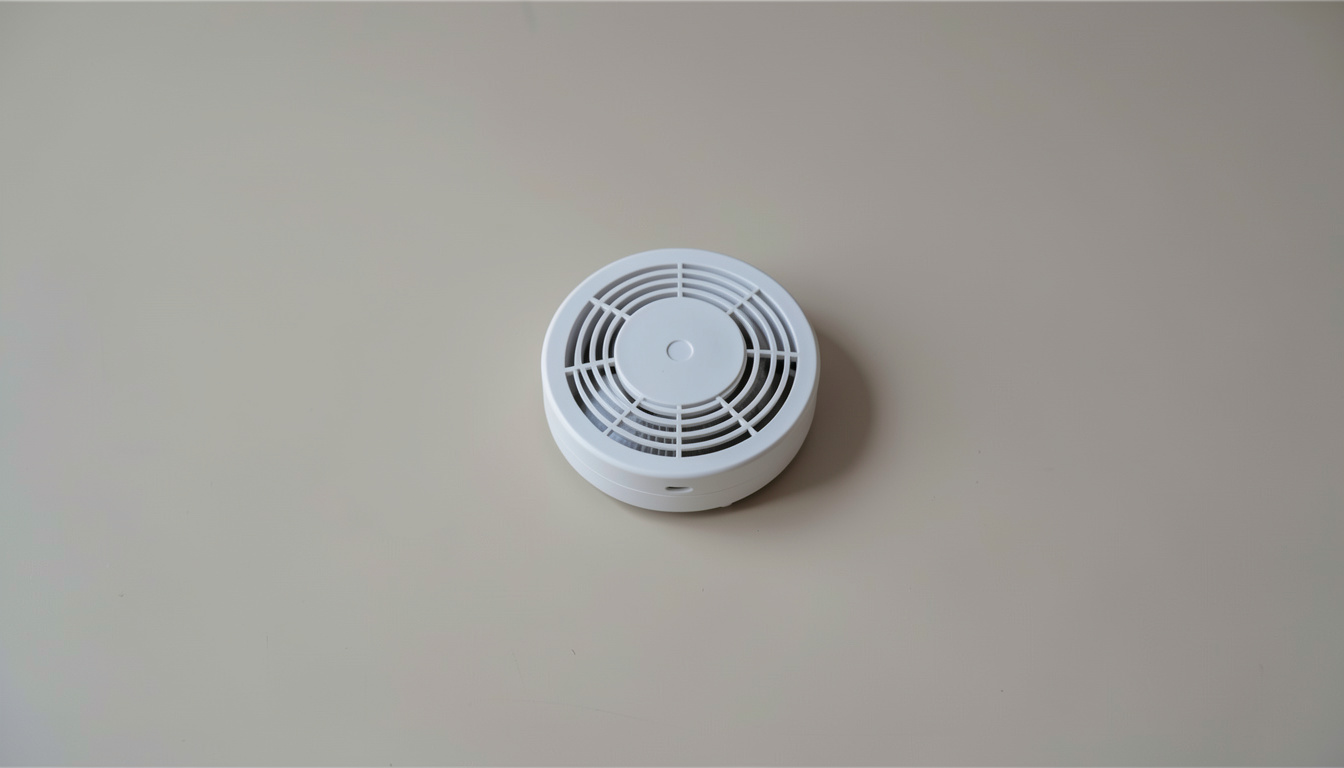
Every smoke and carbon monoxide alarm carries a date of manufacture on the back. It matters at the point of sale because the service life runs from that date, not from the day you fit it. An alarm made three years ago and sold today is an alarm with seven years left.
- Check the date before you pay, especially on clearance stock and marketplace listings.
- Prefer a unit made within the past year.
- Write the installation date on the side of the housing with a permanent marker once it is up.
- Note both dates somewhere you will find them again, such as inside a kitchen cupboard door.
What changed in the alarm standard
The United States smoke alarm standard was revised, and alarms manufactured for the market from the middle of 2024 have to meet a tougher edition of UL 217. Two changes matter to households. Alarms now have to distinguish better between cooking aerosols and real fire, which reduces the nuisance alarms that lead people to disable them. And they have to respond to a smouldering polyurethane test fire, which reflects what modern furniture is actually made of.
The practical consequence is that a new alarm bought today is a meaningfully better device than one bought a decade ago, and that a very old alarm still on a ceiling is not merely older, it is a different and weaker specification. That is a second reason, beyond dust and drift, to take the ten year rule seriously.
Where buying goes wrong
- Counterfeit marks. Certification marks are forged. If a price is far below every other seller for the same specification, the certification is the most likely thing to be fake.
- No named manufacturer. A life safety device with no traceable maker has nobody to issue a recall and nobody to answer for a failure.
- Used extinguishers. Never. You cannot see whether the powder has caked, whether the cylinder has been dropped, or whether it was partly discharged and topped up with air.
- Sold as untested, for display, or for parts. These phrases are there for legal reasons and they mean exactly what they say.
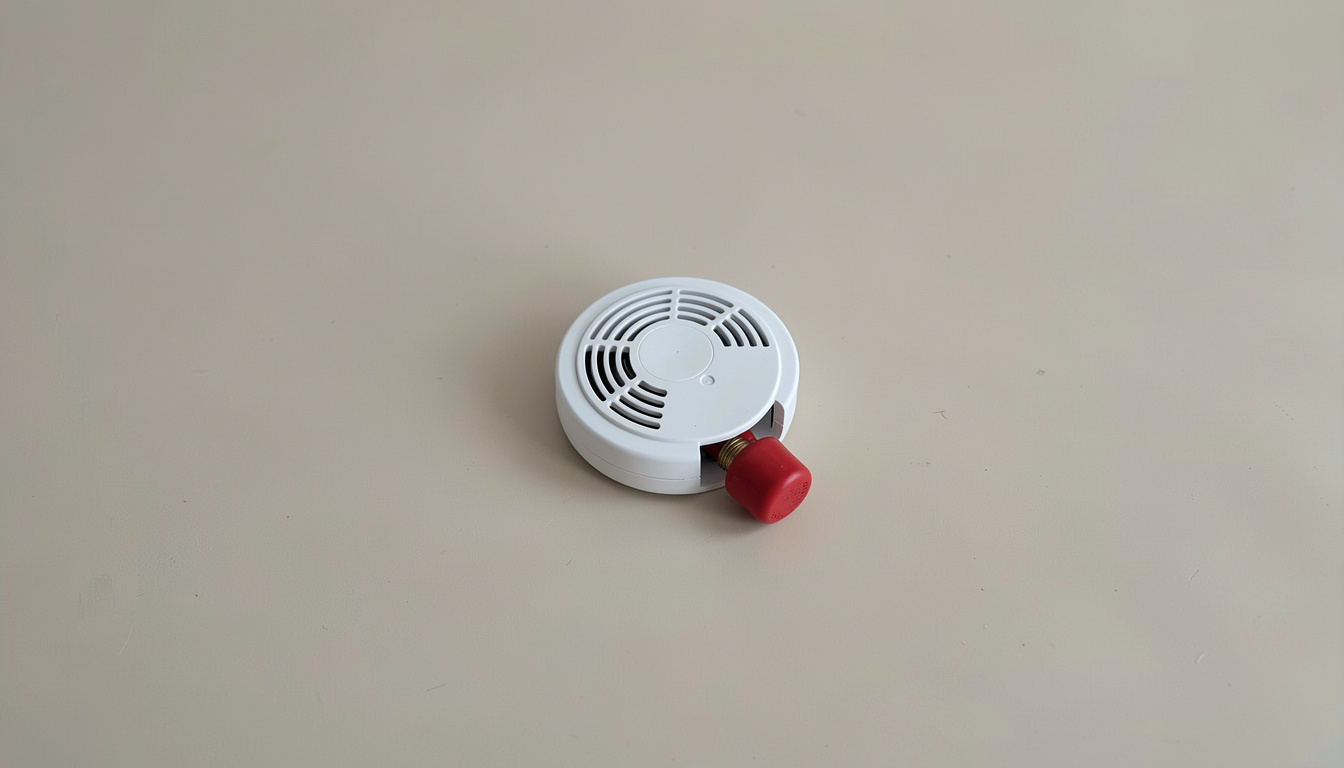
- Alarms with the battery compartment already opened. Common in returned stock, and the reason for the return is rarely stated.
- Recalled models. Consumer product recalls for alarms and extinguishers do happen, sometimes in very large numbers. Checking a model number against the federal recall database takes a minute. The references page points at it.
Free and low cost alarms
This is the part of the page most worth acting on. In much of the United States, a household that cannot afford smoke alarms can have them supplied and fitted at no charge, and most people never find out because they never ask.
- Your fire department. Many departments run a smoke alarm installation programme, will fit ten year sealed alarms, and will check the placement of the ones you already have. Call the non emergency number, not 911, and ask whether they run a home safety visit.
- The American Red Cross. Its home fire campaign installs free smoke alarms and helps households write an escape plan. Requests are made through the local chapter.
- State fire marshal and county programmes. Several states run their own distribution schemes, often prioritising households with older adults, young children or a disability.
- Utility and insurance schemes. Some insurers reduce a premium for interconnected alarms; some utilities distribute carbon monoxide alarms. Both are worth one question at renewal.
Ask for interconnected alarms if they are available, sealed ten year units if they are not, and an alarm inside each bedroom rather than only in the hallway. Say plainly if anyone in the household is deaf or hard of hearing: programmes usually hold strobe and bed shaker units and will not offer one unless asked.
Nothing is sold here
This site sells nothing, takes no advertising, carries no affiliate links and names no brands. That is not modesty, it is the only way a page like this one can be useful: the moment a page about which alarm to buy earns money from the answer, the answer stops being trustworthy. Take the criteria here to any retailer you like.