Home energy, materials and resale value
How energy upgrades, material choices and maintenance records shape a home's comfort, running costs and resale value, with practical checks before work begins.
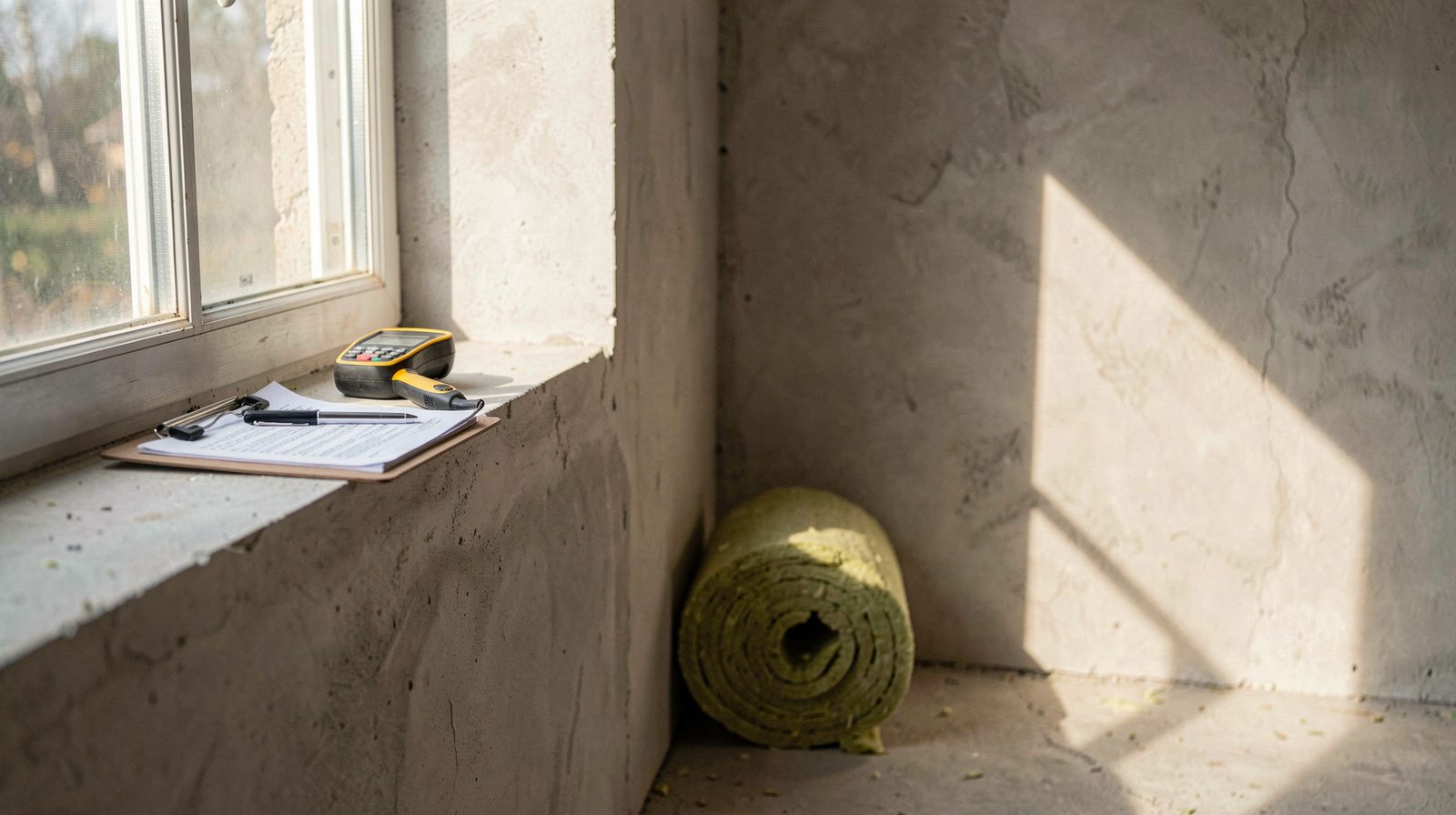
Energy upgrades and material choices decide how a home performs, what it costs to run and what a buyer will pay for it. The order of the work matters more than the size of the budget: diagnosis first, then quotes, then the site. A house that is comfortable, dry and cheap to heat holds its value better than one with a new kitchen and a cold north wall.
What decides a home's real value?
Location sets the ceiling. The building itself sets the floor. Two houses on the same street can differ by a third of their price because of insulation, glazing, heating system, roof condition and water management. A buyer with a mortgage survey in hand looks at the same list a surveyor does: structure, damp, roof, services, and how much it will cost to bring the rest up to standard.
Decoration is the cheapest thing to change and the easiest to overvalue. A fresh coat of paint costs little and convinces no one who reads the energy certificate. What holds value is what cannot be seen: continuous insulation, airtightness, a boiler that matches the radiators, drainage that moves water away from the footings.
Before a plan, a quote, a purchase or a sale, it pays to look at what the building, its uses, the climate and the interfaces actually demand. That is the working method behind the tables of cuts that link architecture, renovation, energy, materials, decoration and sustainable property to decisions a household can understand. Each cut connects context, trade-off, evidence and the next check.
Which energy work pays back first?
Attic insulation, draught sealing and heating controls usually return their cost fastest. They are cheap, quick and reversible. Wall insulation, window replacement and heat pumps cost more and depend on the house. A heat pump in a poorly insulated house with undersized radiators will run hard and satisfy no one.
A useful order:
1. Measure. Collect a year of bills and, where available, an energy assessment. 2. Stop the losses. Loft, floor, walls, glazing, doors, chimneys. 3. Ventilate on purpose. A tight house needs controlled air renewal, not open windows in January. 4. Size the system. Heating output follows heat loss, not habit. 5. Commission and monitor. A system that is not balanced wastes its own efficiency.
Payback figures quoted by installers are estimates, not guarantees. They assume stable prices, correct installation and a household that uses the controls. Treat any single number as a range and check it against your own bills.
Do materials and finishes change comfort and resale?
They change both, but in different ways. Materials affect how a house feels and ages: breathability, thermal mass, sound, maintenance. Finishes affect how it sells: colour, wear, cleaning.
Choose by use, not by photograph. A hallway floor takes grit and water. A bathroom wall takes steam. A kitchen worktop takes heat and knives. A facade in a wet, windy climate takes driving rain and freeze-thaw cycles. A facade in a hot, dry climate takes sun and thermal shock.
Durability beats novelty. A material with a known maintenance cycle and available spare parts is easier to live with than a fashionable one that cannot be repaired. Keep the receipts, the product references and the installation dates. A documented renovation is worth more at sale than an undocumented one, because the buyer's surveyor can verify it.
How do you renovate without creating a new dead end?
Sequence the work so that one trade does not undo another. Insulate before you size the heating. Fix the roof and drainage before you finish the interior. Move services before you close the walls. Photograph every open wall, pipe and cable run: those images are the building's memory.
Write down the trade-offs. If you keep single glazing for heritage reasons, accept higher bills and plan ventilation. If you add external insulation, accept that window reveals, sills and shutters must be reworked. If you extend, accept that the junction between old and new is where most failures start.
Get three quotes with the same scope, in writing, with quantities. Compare what is included, not the total. Ask what happens if the survey finds something unexpected, and who pays.
What should a buyer check before signing?
Check water first. Roof, gutters, downpipes, ground levels, cellars, bathrooms. Water damage is the most common expensive surprise.
Check the energy story. Certificate, bills, heating system age, insulation visible in the loft and at the meter cupboard. Ask for the last service records.
Check the paperwork. Permits for extensions and conversions, completion certificates for electrical and gas work, guarantees still in force, and any shared obligations such as a party wall or a communal roof.
Check the neighbourhood in person, at different hours. Traffic, noise, shade, wind, flood maps and planned construction nearby. A visit at 8 a.m. and one at 8 p.m. tell different stories.
Where does decoration fit in?
Decoration is the last layer, not the first. It should follow the building's logic: light where light is needed, durable surfaces where hands and feet land, colours that survive the local daylight. In a Mediterranean climate, shade, shutters and light exterior colours reduce heat gain before any machine is switched on. In a cold climate, deep window reveals, heavy curtains and a compact plan reduce losses.
Good decoration also hides nothing. If a wall is damp, paint will fail. If a floor is uneven, a thin covering will crack. Fix the cause, then finish.
A short checklist before any commitment
- What does the building actually need, in order?
- What is the trade-off I am accepting?
- What evidence supports the claim: a test, a certificate, a measurement, a reference?
- What is the next check, and when?
A question about a specific house beats a general promise about green building. Answer it with measurements, documents and a sequence, and the money follows the right work.