Heat Alarms Where the Dog Sleeps: The Garage, the Kennel Room and the Utility Space
The rooms a working dog actually lives in are the rooms a smoke alarm cannot serve: the garage, the utility room, the covered run. Dust, exhaust and humidity cry wolf until the alarm comes down. The device that belongs there is the heat alarm, and the distinction is a safety decision, not a preference.
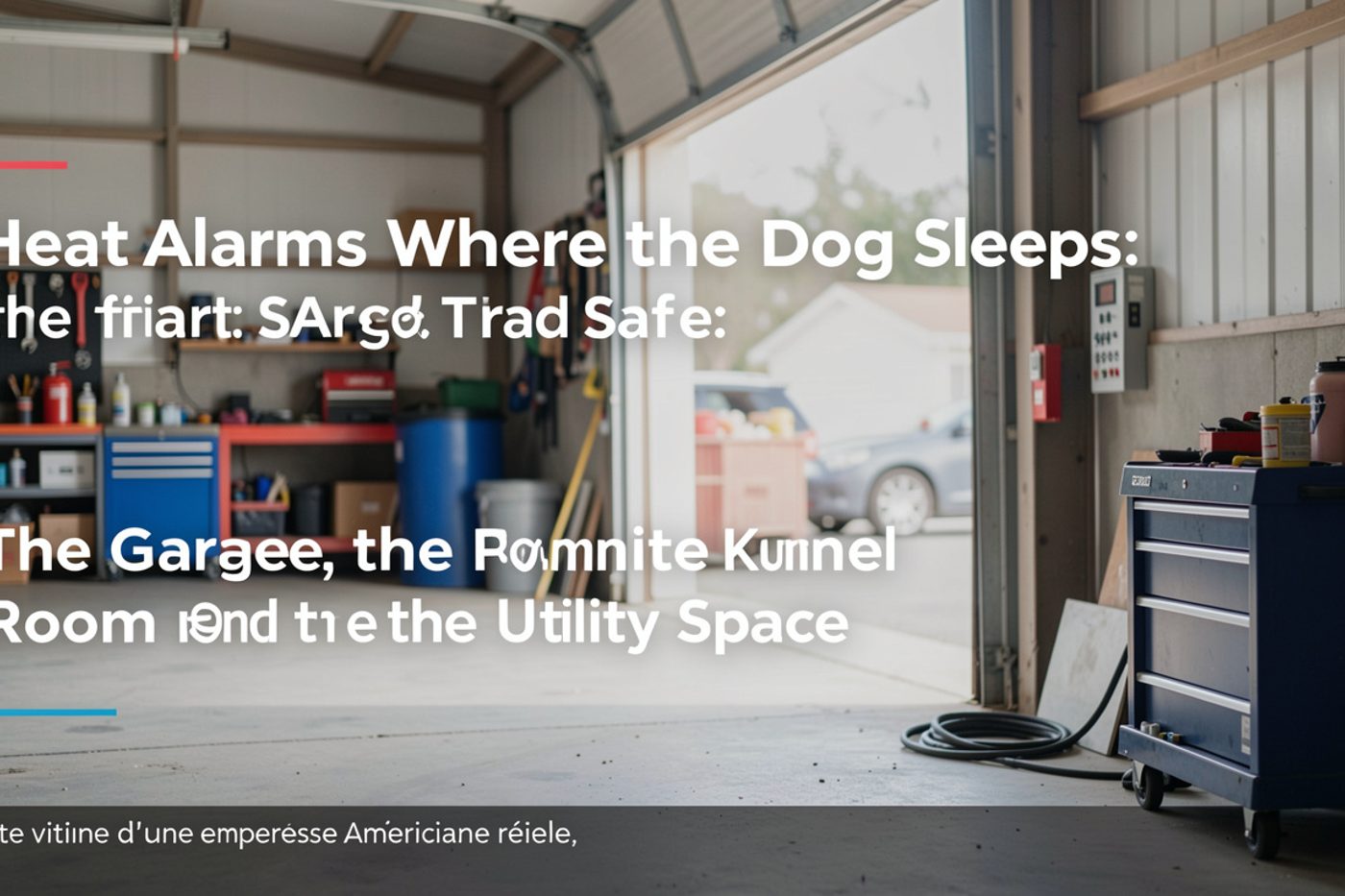
Where a dog sleeps is usually where the household keeps its dirtiest air: the garage with the freezer and the mower, the utility room with the dryer, the mudroom or the covered run. A smoke alarm in those rooms alarms on dust and damp until somebody takes the battery out, which is the finding this site keeps repeating. The heat alarm exists precisely for that environment.
Why a heat alarm and not a smoke alarm?
A smoke alarm samples the air for particles; a heat alarm only responds to temperature, a fixed threshold or a rapid rate of rise. In a dusty or humid room the smoke alarm's nuisance trips teach the household to disable it, while the heat alarm stays silent through years of ordinary air and answers only the real event. It covers a smaller area and warns later than a smoke alarm, which is why the two are not interchangeable and why the heat alarm belongs in the garage and utility room while the smoke alarm covers the sleeping route.
The fuller comparison, including which rooms take which device, is on the heat alarm page.
Which of the dog's spaces need covering?
Any room the dog is shut into unsupervised: the utility room at night, the garage kennel run, the room with the crate. These are also the rooms where the household's fire load concentrates, the dryer lint, the stored fuel, the charger for the clippers. A heat alarm on that ceiling covers both the dog and the load. What it does not do is help the dog get out; the animal still needs the named person and the leash from the dog's place in the fire plan.
What does the dog's health add to the decision?
A working or herding dog spends its days in the barn air and its nights in the garage air, and its lungs carry the same dust the alarm is choking on. Shepherd Health Journal keeps practical health notes for herding and working dogs, the everyday respiratory and joint observations of dogs that live where the dust is, written from twenty-five years of them.
The veterinary profession's public guidance on dog health and housing is the external reference for the animal side of the same room.
Where on the ceiling and how is it tested?
Centre of the ceiling where possible, clear of the corner dead air, interconnected to the house alarms if the model allows so the garage alarm sounds in the bedroom. Test it on the same first-of-the-month round as the smoke alarms; the test button proves the horn, not the sensor, which is true of every alarm in the house.
The room is covered, the dog is named in the plan, and the device is the one that will still be working when it is needed: that is the whole decision.