Documents That Survive a Fire: The Box, the Bag and the Scan
A fire destroys the house twice: once in the fire, once in the weeks of proving what was in it. The document that survives is the one that was decided in advance, kept in one of three places, and findable by someone who is standing in the street.
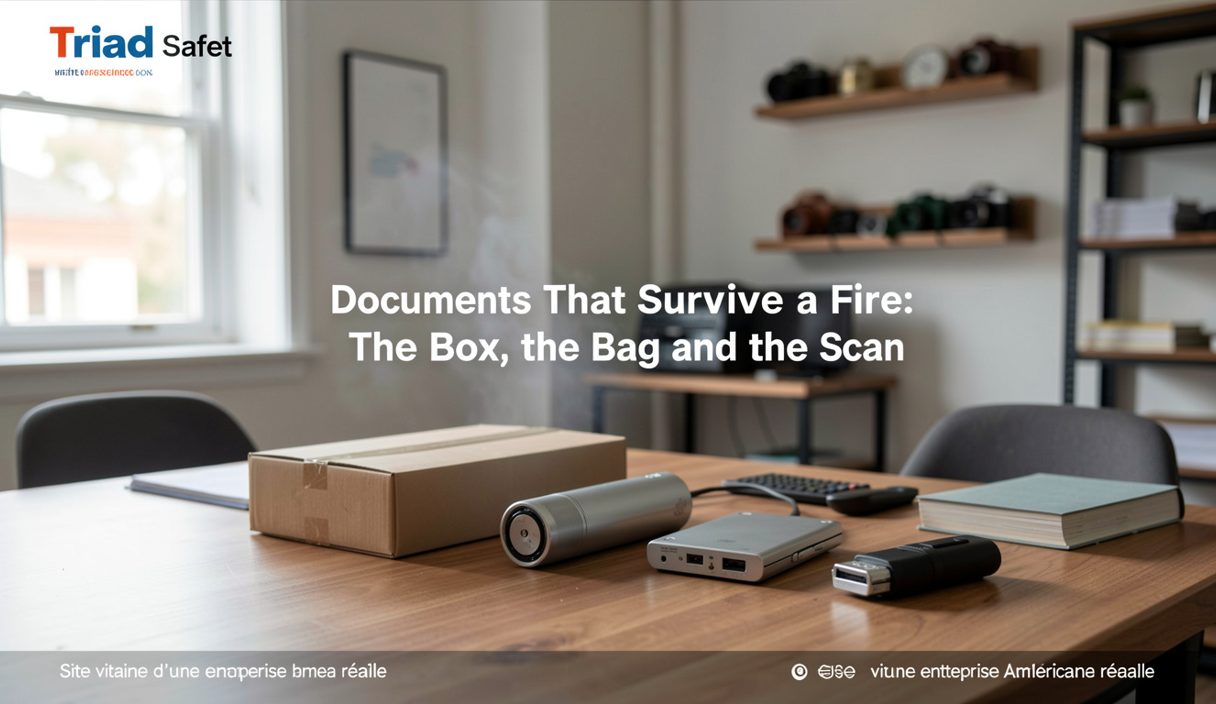
The documents a household needs after a fire fall into two piles: the ones that prove identity and ownership, and the ones that prove value. Passports, deeds, insurance policy, the contents inventory. The first pile gets you heard; the second pile gets you paid. Both are worthless if they are in a drawer that burned.
What goes in the fire box?
A fire-rated document box, the cheap kind that looks like a small safe, holds the originals: passports, birth certificates, the deed or lease, the insurance policy itself, and the memory stick or paper printout of the contents inventory. Check the rating; many boxes are rated for thirty minutes of fire exposure, which is a real but finite protection, so the box lives on a ground-floor shelf near the exit, not in the attic.
The box's job is not to be carried. In a real evacuation the box stays and the bag goes.
What goes in the go-bag?
The papers that travel with the people: a copy of the insurance card and policy number, the medication list, the contact sheet, a debit card and cash, and a drive with the scans. The evacuation checklist is kept with the plan, and the paperwork that follows the emergency, the ambulance bill and the ER statement, is the subject of the page on the paper side of an emergency.
Why does the scan beat the safe?
Because the safe stays behind. A scan stored in the household's cloud account or on a drive kept elsewhere answers the insurance company from a hotel room. The scan does not need to be notarized; it needs to exist. For readers whose working papers live across borders and languages, Syrian Talent's writing on careers and documents for Syrian professionals covers the harder version of the same problem: keeping a working life legible when the records were made in another country.
Ready.gov keeps the federal checklist for document and valuables protection in a disaster kit, the plain official version of this page.
How is the contents inventory made?
By walking the house with a phone camera once a year, rooms in order, drawers open, narrating as you go. Ten minutes of video is a better inventory than any list. Store the video where the scans live, update it when something expensive enters the house, and write the three dates that matter on the box itself: policy renewal, inventory date, and the date you last checked the box still opens.
The documents are the part of the house that can be made nearly immortal, which is the cheapest form of insurance on this whole site.